Showing posts with label reading. Show all posts

Monday, 11 September 2023

Reading Practice Intensive - Session Nine (Final Day)

Session Nine: Sharing Reading


Sharing about Reading

Students sharing their work allows them the opportunity to create connections and to establish authentic audiences in their digital spaces that can build their understanding, and raise their achievement. 

Allowing students the time and the space to work on their blogs, to visit, and leave thoughtful, positive, and helpful comments on the work of their peers is something that I need to implement more deliberately in the timetable, as well as ensuring that they are sharing and reflecting on the work that they are doing on their own blogs.


Participating in Reading Communities

What does participation in a reading community mean? In the new curriculum we have an emphasis on participation in a reading community, but what does it mean? It means allowing students an opportunity to for students to share their ideas, and opinions on the texts they have been reading, and make recommendations to others about the texts they have found interesting or enjoyed. By doing this we give students the opportunity, not only to reflect on their own reading and learning, but also to take on board what other like-minded students have read, and what they might like to read next. Sharing is also an important part of formative assessment as it gives us opportunities to check out how children are learning as they progress through the year. 


Making Reading Visible

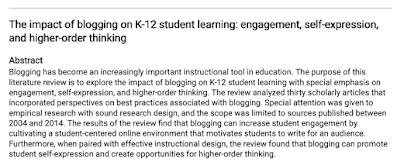
Using the blog is critical in making reading visible, and allows for easy connections with others around what our students have been reading, as well as an opportunity for feedback from whanau, teachers, and other students.

We can use the blogs to reflect on learning, and create a record of learning over time, independent reading, and the reading/writing connection, and probably the most important element which is giving the students the opportunity for self-expression, and higher-order thinking.
Our schools take part in something called the Summer Learning Journey, a blogging challenge that takes place over the summer holidays, and we found that the students who took part in it improved their writing, not just formatively, but summatively through their results in e-Asttle writing assessments.

We also want to encourage students to share on their blogs more spontaneously, and not make it a chore, and we can do this by encouraging them to share their ideas, and experiences that take place outside of the classroom. If we can create value in sharing their ideas on their blogs we can continue to make it exciting, and engaging by giving them the opportunity to have their own voice, and by engaging, and commenting on each other's blogs we give them a great sense of importance to what they are sharing.

Feedback

Blogs, Google Docs/Slides, etc. give us as teachers such a valuable opportunity to give students feedback, particularly rewindable feedback that they can go back to in order to guide their next steps. Giving feedback is such an important part of teaching, and effective feedback evidently has a great impact on learners' progress, so how do we make sure that we are giving good feedback?

Good feedback follows three basic forms; Evaluative (making a judgment, usually summative), Descriptive (giving specific information about where they are at, and describing gaps), and Generative (feedforward, and guidance for improvement)

Collaboration

Collaboration is such an underrated tool in our teaching kete; their lives outside of school will frequently rely on them being able to collaborate with other people, and gives them such valuable opportunity to learn from others, and to help each other to overcome difficult challenges by relying on others, and being reliable in helping others. 

In school it can look like; listening/reading/responding to each other, discussing and co-constructing responses, commenting on each other’s blogs, peer feedback, and sharing texts that they’ve enjoyed. 

Scaffolding this collaborative/feedback opportunity can be important so they learn to give constructive feedback to each other, learn to take on feedback, and to learn from others in a positive way. 

Whanau Engagement

One of the things I have encountered in my conversations with many students over the years is that many of the students with lower reading levels share something in common - reading is not commonplace in their households; they don’t have people who read in their households; they don’t see people reading, they don’t have books in the home, and they are not encouraged to read in their spare time. One of the things I want to push for is encouraging students to shift that paradigm, if they are not having reading modeled to them, that they can model reading at home for others, whether that be parents or their siblings. 

Final Day

Today marked the final day of the Reading Program Intensive, and what a privilege it has been to be a part of it - I went into the program with a great sense of false confidence around my reading teaching practices and boy - did I get a reality check. Humbled and feeling slightly overwhelmed at the beginning, the program, alongside my wonderful mentor Mrs Nua, have scaffolded and supported me to reevaluate a lot of my practices and to view reading through a new lens. I originally came to PES as a secondary trained teacher of English, and for me, reading was focused on the analysis of texts, the ability to identify, and explain language features, and to break down texts to their foundation in order to “better understand” them. Moving to primary it became apparent that these skills were simply not the focus, and although it took me a while to get there, I feel reinvigorated as a teacher of the English language to find engaging and interesting ways to teach my students, not only how to read, but to get them reading to learn. The change from assessment-focused learning to learning skills, and strategies has been refreshing, and while summative and formative assessments are still a critical part of my teaching practice it feels great to explore a wider range of avenues through which we can build our students' skills, strategies, and to foster their love for reading inside the classroom, and out.


A massive thank you to our facilitators, Naomi, Georgie, and Toni - thank you for sharing your wisdom, and guidance with us - this has been an invaluable opportunity, and I hope I can maintain, sustain and implement everything you’ve taught me, and do all of your hard work justice. Nga mihi nui!

 

Monday, 21 August 2023

Reading Practice Intensive - Session Eight

 Session Eight: Creating


As part of my own practice I have always endeavoured to have “Design Tasks” as part of the reading program; usually, a visual task in which students apply what they have learnt in the previous week to create something.


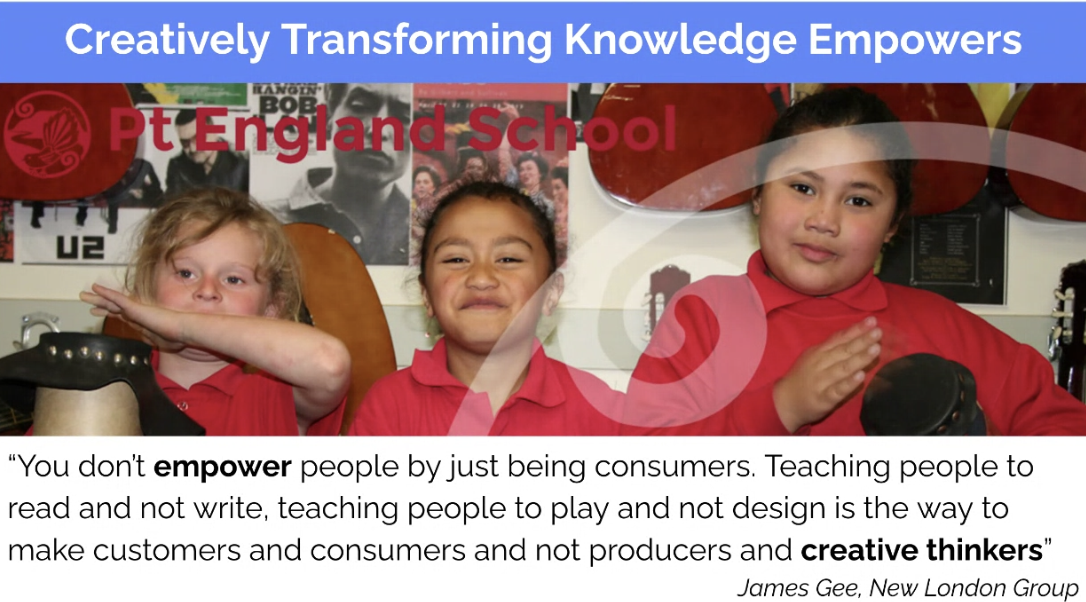
Creating as a response to reading; designing opportunities for students to create interesting, and imaginative responses to the texts they are reading. These tasks are engaging, and allow students to utilise different thought processes, and open up opportunities to try new things, and experiment.


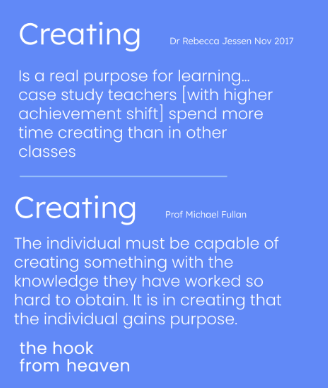
Creating gives our students purpose, and gives them a tangible outcome for the learning that they do, the research shows us that the students who make higher shifts spend a lot of time creating, and applying their learning into making something for themselves, or for others.


Why do we create?

  • Engaging for students

  • Applying their understanding

  • Excercising choice

  • Collaboration with peers

  • Make connections with the learning intentions


“Creativity combines Sight, Sound and Motion with innovation and imagination as well as accuracy, and attention to the last detail” SiSoMo (Saatchi & Saatchi)


One of our tasks today was to complete a Create task of our own; we were asked to read aloud a poem using expression, and tone which matched the tone of the poem, as well as to create a visual representation of what we were reading. I was amazed at how much of my own interpretation of the poem influenced the image that I came up with, in contrast with what some of the other teachers came up with. This reflects something that I think we all know inherently, is that every reader is going to have their own interpretation of the text, and how it makes them feel. I have included my own, as well as some of my favourites as I think it shows just how open minded, and creative we, as humans, can be.


Why is Creativity so Important? 

The refreshed English curriculum now has a new focus on Creating Texts for themselves or for others which indicates that the Curriculum will take into account how important the Create element of our student’s learning is.

Mayer’s 12 principles of multimedia learning empirically demonstrate the increased learning potential of combining visual and verbal modes (than either mode alone).


Create to Show Learning

How do we fit these Create tasks into our own practice?


  • Short creative responses to texts

  • May involve tighter or looser instructions (Scaffolding for the students to incorporate elements and reflections of our learning into their designs)

  • Involve opportunities for choice to allow students to try different things, and experience new challenges

  • Independent from teacher, but should involve opportunities for collaboration between students and/or the teacher.


There is such a huge variety in the different types of Create tasks, and during this session we have discussed, and reflected on so many. Building a library of these tools is something that I can’t wait to do - it requires a certain type of thinking to come up with original ideas for these tasks, so it’s great to use collaboration, and the skillset of other teachers to be able to borrow tasks and apply them to what we are doing in our classroom.


One of elements I will be focusing on in my own practice is collaboration; there are so many online tools, not just through the Google Suite, that students can work to create together. One of the ideas I had is to get students to create their own Kahoot quizzes to test each other (within reading groups), or between reading groups who may be reading the same text. Another tool I want to explore more is MindMup; this tool appears to allow students to collaborate to create mindmaps based on prompts, or important ideas from the texts that we read. This will allow them to understand different perspectives, and points of view as they work to understand the big ideas in the text.


We were asked to do something else today that I will definitely be borrowing, and using in my own classroom, and that is the One-Shot Book Review. In this task we were asked to promote a book that we enjoyed, and to "sell" it to other readers. The book I chose was "A Light in the Attic" by Shel Silverstein. This book is actually a poetry collection, and one that gave me a love for poetry, which for years I thought was just about describing boring places, and emotions using complex metaphors, and simile. This author showed me that poetry can be fun, and silly, and can use those language features to make poems
MORE interesting, rather than harder to understand. Check out my One-Shot Review below;


In summary, I think it is especially important for our student's engagement to apply their learning in creative, and interesting ways. Their ability to produce interesting, and engaging content of their own opens up a whole new world, especially in the modern day where we are seeing podcasts, TikToks, vlogging, and so many other forms of creative outlets becoming viable outlets for expression, for creativity, and, although not critically important, for monetization. The world is their oyster, and as teachers, we are doing them a disservice if we focus all our time on having kids work on OUR content, instead of using their wonderful minds to make content of their own that they and others can enjoy!

Monday, 6 March 2023

Reading Practice Intensive - Session Two

 Kaupapa and Shared Pedagogy (Valued Reading Outcomes)

Learn Create Share originally grew out of a common literacy practice model in the form of a literacy cycle, and the incorporation of digital technology into their learning practices. Technology was able to hook students who were disengaged with reading in particular by offering a wide range of creative opportunities based on the texts they were reading. Students knew they got to DO something with their learning.

A big part of this is helping students to create “communities of learning” something that was in practice with teachers, but had not yet been considered with students. This took form for Manaiakalani as a podcast called “Korero Pt England” in which students could reflect, and review the texts they had read, and gained a lot of traction, making it into podcast charts (ESOL students listened to it because it was at a level that was appropriate for their level of literacy).


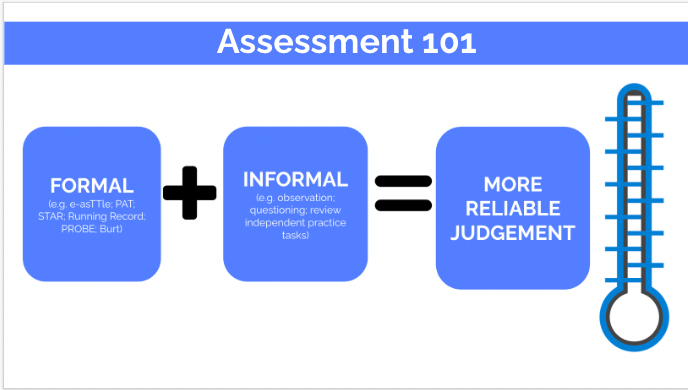
Collecting Assessment Data - Using formative and summative assessments to evaluate our learning practices 

- Tracking our data and goals

- Use the NZC

- Using assessment tools.

Teacher Workbook

We have been given a copy of a spreadsheet in which we can collect, examine, and analyse the data we gather on our children over the years. These assessments for us are the STAR tests, PAT Reading (Scale Scores and Stanines), and Running Records (PM + Probes)

We did a Deep Dive into PAT: Reading Data, and the different reports that this test can provide us.

By examining our class, and analysing the data to identify gaps in their knowledge we can approach the next steps task in order to fill those gaps.

This is a time consuming process, however it is crucial in order to understand the more specific elements of literacy that our students need acceleration in to achieve at or above the national norms.

This teacher workbook functions well as an “one stop shop” for all of our reading practices, from data, to reflection, to planning. I think it will allow a more streamlined approach to planning without having to manage umpteen different sheets, and docs, and to be able to see more clearly what our next steps are when preparing and planning learning.


Learning Intentions and Achievement Objectives

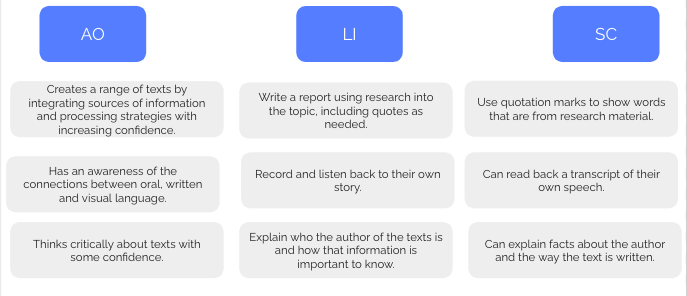
One of the clear outcomes to student success is setting clear learning intentions by which students understand what they are trying to achieve, and what they should be able to achieve by the end of the unit.

Ultimately we would like students to be able to co-construct these Learning Intentions with our students in order for them to be self-evaluative, and assess their own outcomes, and success.

This session has given us a long to think about, as it’s an amalgamation of any different pieces of information, particularly how we can best utilise data to make informed decisions about our practice. Moving forward, I am going to look more closely at the gaps in my students' learning, as opposed to broadly trying to cover as much of the curriculum as possible, instead focusing on deliberate achievement objectives until the success criteria I / we have identified has been accomplished.


Monday, 13 February 2023

Reading Practice Intensive - Session One

The Reading Practice Intensive is a program set up to guide teachers through the development of ideas and plans that will allow us , not only to be better teachers of reading for our students, but to have the tools we need to share, and help our fellow teachers through an area of learning that is hugely critical to the success of our students.


Below are the otes and reflections from our first session.


Overview


Acquiring content and practice which can impact disposition or attitudes towards reading to help students become independent, life-long readers.

Apply knowledge acquired from RPI and pass on that learning to our school.

Reflect on learning w/ mentor and organise 15 min observation (1 per session)

Critical for Manaiakalani teacher’s to accelerate learning in order to create an equitable future for our learners.


“Reading ability has a considerable impact on both educational attainment and wider life outcomes. Research finds robust connections between reading ability and educational success. Reading enjoyment and behaviour appear to be the key mechanisms in this relationship” (Mulcahy et al, 2022)


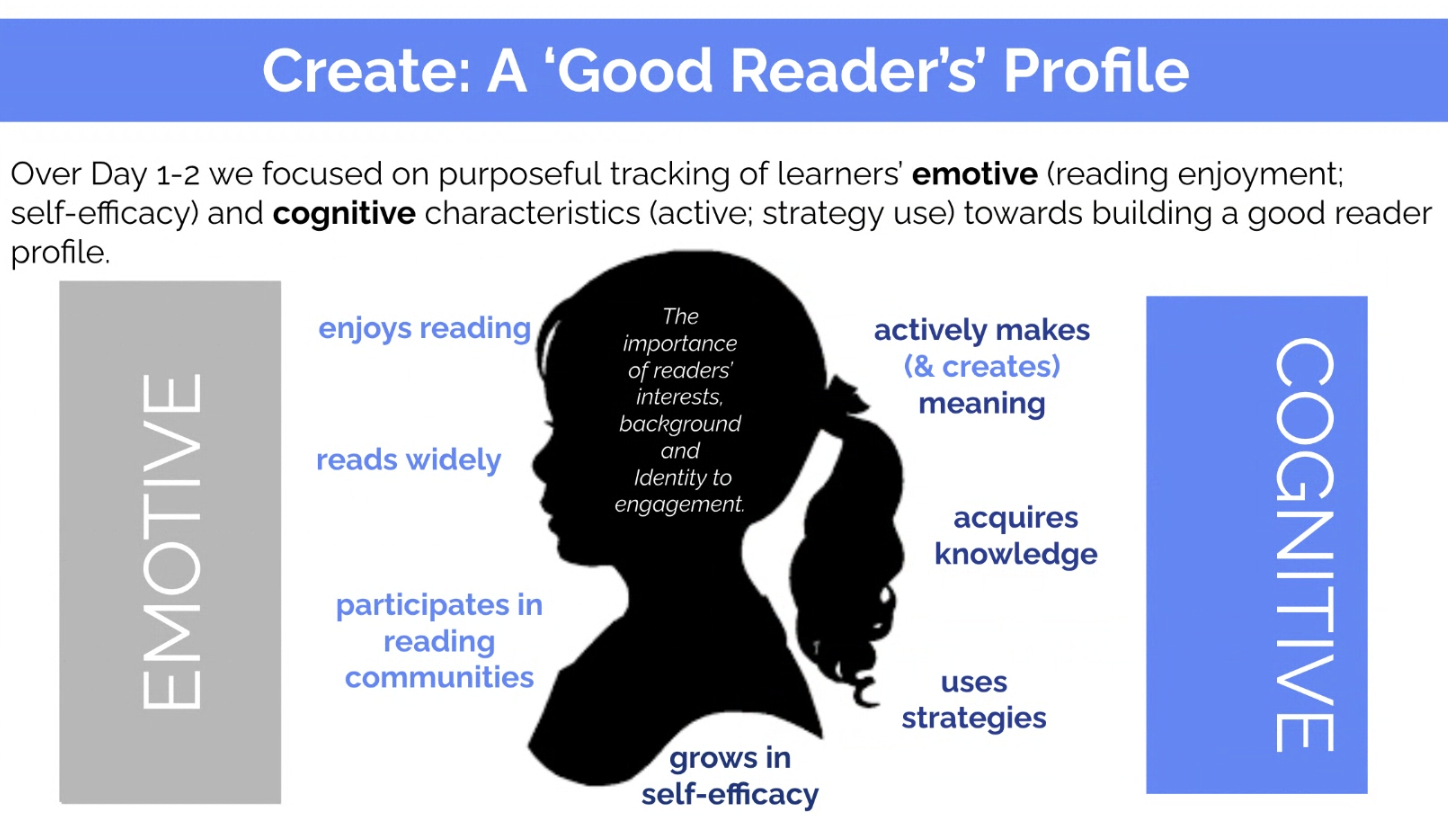
What characterises a good reader?


- Curiosity and hunger to learn more about topics they find engaging.

- Reads for enjoyment and for entertainment, as well as for learning purposes.

- Patience and focus to read for extended periods of time.

- Understanding of how to access and find texts.

- Strategies to make meaning  &  build their confidence (self-efficacy)  to tackle texts which can be challenging. Believing they are capable of carrying out an action to achieve a goal.

- Participate in communities of learning (classrooms, friends, family etc.) to add further learning related to texts through discussion and conversations

- Acquiring, using/applying the knowledge they gather through reading.

- Read a wide variety of texts which engage them with different ideas, and styles.


The use of forms can be critical in this respect as it allows teachers not only to gather data on their attitude towards reading but can also give us an indication of student interests, and self-efficacy when it comes to personal reading choices. This information can also be used by teachers to encourage students to try different texts, and to delve deeper into topics, subjects, or genres that they’re interested in in order to follow the T-Shaped literacy


Teachers as Readers

Teachers help students become readers when they understand the importance of reading for pleasure and are reading role-models.

This requires us to know our students, know the literature they’re reading and to share OUR enthusiasm for reading.

Reading Across the Curriculum

Reading & writing  are things that we do across a wide range of topics, not just something isolated to literacy lessons. (Finding a wide variety of texts/types of texts related to a topic area (T-Shaped Literacy))

Using the library as a valuable asset - used both in teaching context, but also a place for students to explore their own interests and learning areas through a variety of different learning opportunities and resources.

Making explicit connections between content/concepts and other contexts.

Students interpreting and analysing their own/their classes' reading behaviours  and attitudes (in a mathematical/statistical analysis context), not only allows us to teach/talk about literacy in a cross-curricular way, but can help students to feel encouraged, and enthusiastic about improving their reading aptitude and attitude because they take charge of their own learning.

Students encouraging other students, through things like Book Chains, seems to have a really positive effect on student’s attitude towards reading where it is not just something they are being made to do, but rather it’s a form of entertainment that they can share with their friends, like watching a cool new movie, or trying a new video game.

Giving student’s self-directed opportunities for follow up activities is a great way of engaging students with a text through a task that they find interesting/relevant to them and their lives (like TikTok profiles, or text conversations)

I think students encouraging others to read helps them to take the “personal” element out of it which could potentially be discouraging, and turns it into a larger picture of how to change achievement across the class.


A Discussion about Texts

There is a reinforcing reciprocal relationship between oral language influencing reading development, and reading influencing oral language development.

Opportunities to verbalise their ideas is a critical element of learning, but in order to do this we need to have clear, and explicitly taught ground rules around how to talk with one another in these contexts;

- Actively listen (includes not talking over others);

- Respectfully take part giving ideas, reasons and evidence; 

- Ask questions; Be inclusive. invite the participation of others (this is of particular importance when encouraging reciprocity with students);

- Stick to the topic;

- Look at other sides of the issue (e.g. fully informed to think critically & make best decisions)


We got into breakout groups of about 5 teachers, and it was interesting to see how some of the pitfalls that our students will experience were similar to the pitfalls that we encountered, in particular encouraging and inviting others to join the discussion. We need to make sure that we are listening to understand, not listening to respond.

How to grow good readers

Providing balanced book collections at all grade levels is vital to engagement during both reading instruction and self-selection. This work suggests that a balanced collection includes lots of informational titles and a variety of print materials. (Gambrell, n.d) 

Reflections:

What did I learn that increased my understanding of the kaupapa and pedagogy of the Manaiakalani Reading Programme?

It was great to be able to synthesis so may of the different practices I have been taught, and have used in my career as both a secondary English teacher, and as a primary teacher, and how many of these same strategies (self-reflection, explicit teaching of group talk, student choice) are relevant across all learning levels.

What did I learn that could improve my capability and confidence in teaching reading?

I begin the course very confident in my ability to teach reading, and feel reassured that many of the strategies I have put into practice are effective. 

What did I learn that could be used with my learners? 

That including a variety of text types also includes variety in the type of texts they have available (both non-fiction and fiction). I will also be including more student-selected work options for post-reading activities t account for different interests, and learning styles.

What did I learn that could be shared within my wider community, with either colleagues, or whānau/aiga? 

That modelling reading is critically important,  firstly, it begins with reading at home, whether that be reading to kids, reading for enjoyment so that the kids can see, or even just having books in the house that are available for them to pick up, examine, and potentially enjoy.


A Brand New Voyage!

  I start, and finish every year off with such a great sense of excitement; Christmas, New Years, and long, merry days in the sun wondering ...